
5 Ways a Medical Office Admin Program Preps for Clinics & Hospitals
By Jennifer Maki · Communications Specialist

Behind every calm, efficient, welcoming medical office is a stellar professional keeping it all running – the medical office administrator (MOA). If you’re imagining yourself in this role or getting your MOA certification** in Ontario, you may be asking: Will my training actually prepare me for the real-world pace of hospitals and clinics?
At Anderson College, the answer is a resounding yes. Our medical office admin programs – whether our in-person CCHIM-accredited** program with a practicum or online program with a Capstone project – aren’t just about theory, they’re focused on mastering the tools, systems, and specialized skills, healthcare employers expect. From your very first class, you’ll be immersed in exactly what’s required to confidently become a medical office administrator you can be proud of.
Here are five specific ways we prepare you for what you’ll need to keep, or even set, the pace at hospital, clinics, and medical offices.
5 Ways Our Medical Office Admin Program Practically Prepares You
1. Training with Industry-Standard Medical Software
To confidently step into a medical office, clinic, or hospital, you need more than a basic understanding of admin tasks; you need real-world experience using the same tools healthcare teams rely on every day. That’s why Anderson’s MOA program leads with Electronic Medical Records (EMR) training, the industry-standard for medical software.
You’ll develop skills in:
- Scheduling patient appointments with accuracy and efficiency
- Managing billing and insurance processes
- Maintaining patient records, from intake to update, using EMR software.
Why it matters:
In today’s healthcare settings, employers expect new team members to be confident using EMR systems from the start. By building those skills during your training, you’ll walk into your first role fully prepared to handle real patient information and clinic operations, helping your team stay organized and patients feel cared for, without missing a beat.
2. Mastering Medical Terminology and Communication
In healthcare, the terminology required to understand and speak, in order to do your job effectively, truly is like learning a new language. But we’ve got you covered. Our industry-expert instructors have been right where you are, and we have the curriculum and support you need to get up to speed. We’ll ensure you gain, practice and master the terminology and communication required to feel confident in any healthcare scenario.
You’ll develop skills in:
- Understanding common healthcare terms
- Communicating effectively with patients, doctors, and healthcare teams
- Managing appointments, patient prep, and front-desk interactions.
Why it matters:
Clear communication helps prevent errors, improves patient care, and ensures a smooth flow of information. Whether you’re greeting patients in a hospital front desk job, coordinating an office or patient intake, engaged in medical transcription at a clinic or working as a health records clerk, knowing the language of healthcare makes all the difference to your success.
3. Hands-On Experience Through Simulations
There is a fundamental difference between reading about a skill in a book and being able to apply that skill in an environment that simulates an experience you will have on the job. Whether you’re taking our in-person MOA program and testing your skills in a lab or engaging in our online program and applying those skills in a Capstone project, you’ll gain the insights from our instructors and build the confidence to know you can do the job from day one.
Through hands-on training or Capstone project application you’ll test your skills with:
- Patient check-ins and administrative procedures
- Engage in accurate data entry and document handling
- Test out the types of admin emergencies you may face and how to deal with them.
Why it matters:
When you take on your first position in a fast-paced medical office, clinic or hospital setting, you’ll feel prepared. Being able to test out situations before they happen, allows you to learn, correct, receive feedback from instructors on how to improve, apply the learnings and then master the skill … before you start your job. This means you’ll be able to handle real-world pressure with confidence and patient interactions with ease. This sets you apart as you look to land that dream position.
4. Focus on Professionalism, Privacy & Confidentiality
As a medical office administrator, your role goes beyond handling daily tasks, it’s about upholding patient trust and maintaining the professional standards healthcare teams rely on. At Anderson, there’s a keen focus on professionalism, patient privacy regulations, and front-office etiquette.
You’ll receive training in how to:
- Follow Canadian patient privacy laws as laid out in the Personal Information Protection and Electronic Documents Act (PIPEDA)
- Manage sensitive medical information with care and discretion
- Mitigate and manage risks
- Respond to front-office situations with empathy, calm, and professionalism.
Why it matters:
MOAs are often the ‘face’ of the office or clinic and the keepers of information for patients. Building trust with those patients starts with protecting their information and creating a respectful, welcoming environment. By developing these habits in training, you’ll step into any medical office, clinic, or hospital as a polished, dependable part of the healthcare team.
5. Superior Career Support
Graduating with skills is a splendid thing. But turning those skills into a rewarding healthcare career – we understand – is the goal you’re ultimately after. We’re determined to support you in every way we know how to achieve that goal. That’s why we provide personalized career support (and in our in-person program, practicum placement services) alongside your training … so you can move from student to working professional with confidence.
You’ll have access to:
- Resume-building workshops and mock interviews tailored to healthcare roles
- Job search tools, resources, career coaching, job fairs
- Access to Anderson College’s dynamic alumni, for networking and career building for years to come.
- And these services are available to you as a graduate – for life.
Why it matters:
After all your hard work, you want to shine. Our career services team prepares you in a way that allows you to highlight the training and experience you’ve gained and shows that you are the ideal candidate for the position. With a resume that grabs attention, interview skills that wow, and industry network connections, you’ll have the competitive advantage you need to achieve that ultimate goal and land your first, or next, position in healthcare.
_______________________________________
When it comes to building a career in healthcare, confidence comes from knowing you not only have the training and skills to tackle the job effectively but have tested them out, thoroughly, before you’re under the watchful eye of a new employer. Practical training makes all the difference. At Anderson College, our Medical Office Administrator program (whether in-person or online) equips you with everything you need – from technical systems and medical terminology to professional communication, patient privacy, and career support – in less than one year.
This isn’t just about learning; it’s about stepping into real clinics, hospitals, and medical offices ready to make an impact. With the key skills, experience, and mindset, your first day on the job becomes the first step in a career you can be infinitely proud of.
**Please take special note – only the MOA program that includes a practicum is accredited by the Canadian College of Health Information Management (CCHIM). Students who opt for the Capstone project will not graduate from an accredited program
____________________________________
Still considering whether this MOA path may be for you? Take the “Medical Professional Career Discovery Quiz”? Or want to know more about this role? Read, “What a Medical Office Administrator Does.”
But when you’re ready to start your Medical Office Administration career, we’re here to help you navigate the steps to get there. Book a virtual appointment with our Admissions team to join the next class!
We want to make sure you have what you need to succeed! Check out these reference links:
- Medical Office Administrator programs at Anderson College – in person (CCHIM accredited **)
- Medical Office Administrator program at Anderson College – online
- What a Medical Office Administrator Does – Anderson Blog
- Patient Confidentiality and YOU – For Medical Office Admin Graduates – Anderson Blog
- 5 Skills to Give you the Leading Edge as a Medical Office Admin (andersoncollege.com)
Found this useful? Share it with a friend who's exploring their next career step.
Frequently asked questions
Quick answers about applying, funding, and life at Anderson College.
How long does it take to complete a program at Anderson College?
What financial aid options are available?
Are international students welcome?
How do I apply?
Does Anderson College offer job placement support?
Still have a question? Speak with an Admissions Advisor →
More from the blog

5 Things to Consider Before Enrolling in an Early Childcare Assistant Program
Choosing a career in early learning and childcare means stepping into a role that supports […] …
Read article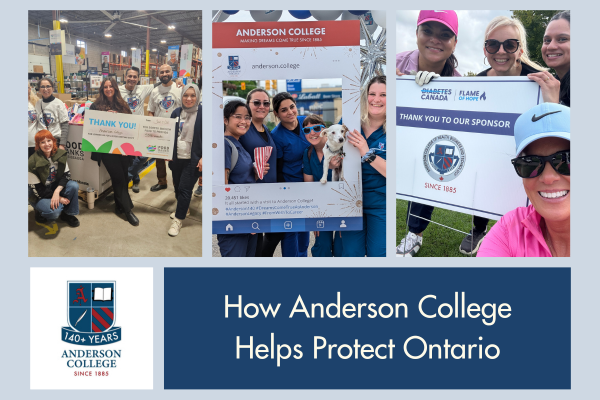
Stronger Communities, Brighter Futures: How Anderson College Helps Protect Ontario
Supporting communities is at the heart of Anderson College’s mission, and it has been for […] …
Read article
The Importance of Medical Office Administrator: The Backbone of Healthcare
Healthcare in Canada is increasingly complex. Patient volumes are rising. Documentation requirements are expanding. Digital […] …
Read article