
Top 10 Benefits of Hands-on Career Training
By Jennifer Maki · Communications Specialist
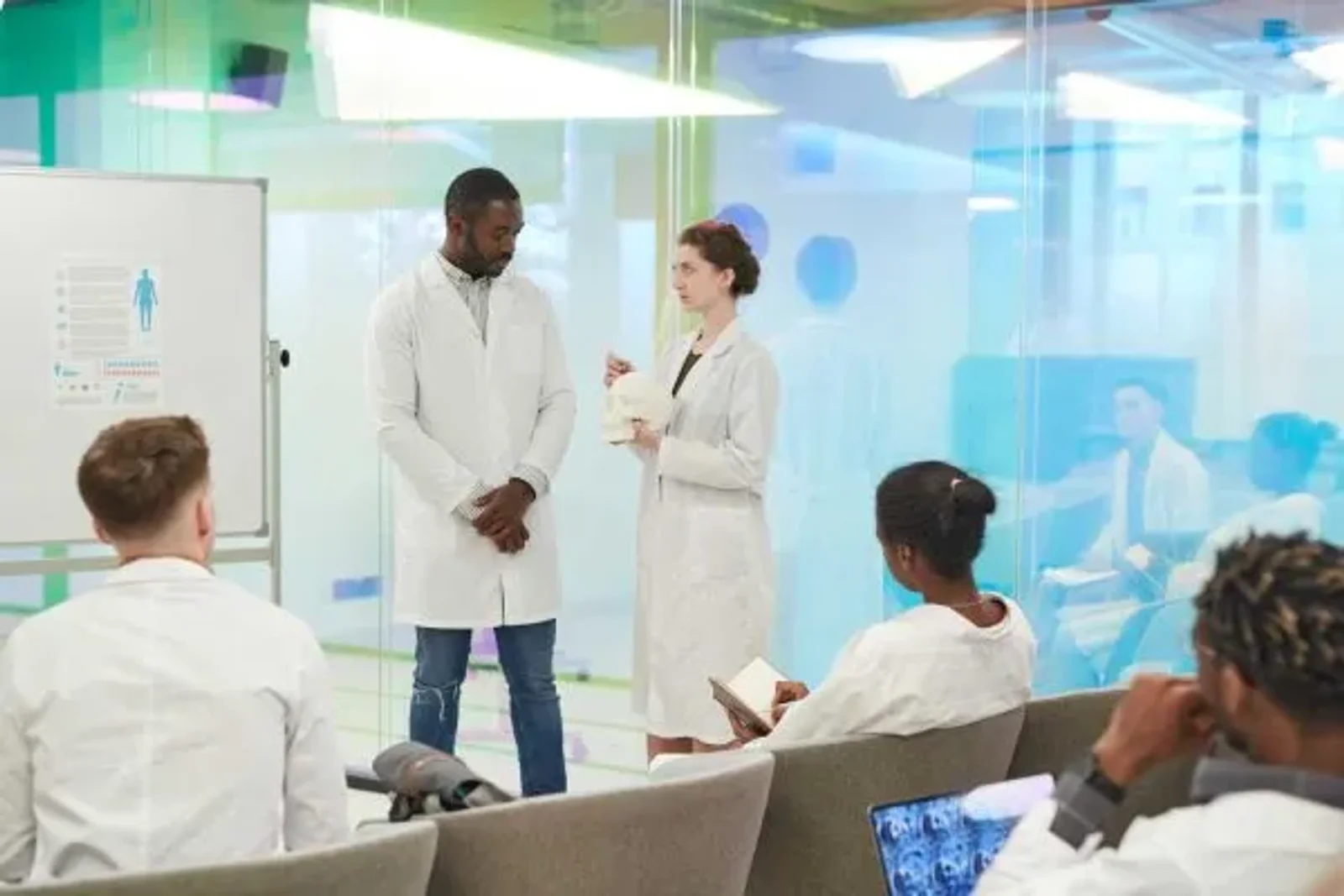
Bridging the gap between theory and practice, between education and launching in your desired field, and key to gaining the competitive advantage after graduation – hands-on career training is crucial to your success.
Benjamin Franklin said it best, “Tell me and I forget, teach me and I may remember, involve me and I learn.”
To truly serve the students of today and empower the professionals of tomorrow, a leading-edge training experience must include real-world experience. Career-focused education that makes way for students to not only listen but apply that knowledge, watch and perform, in a safe environment that bolsters confidence and career readiness. And the benefits don’t stop there.
Here are the …
Top 10 Hands-on Career Training Benefits for You to Consider
1. Bridges the Theory-to-Practice Gap
Theoretical knowledge is crucial as a foundation for understanding, but expertise is honed when students can apply that knowledge in a simulated-training and/or real-world setting. State-of-the-art labs are key to many of our programs at Anderson College. Specialized programs need specialized training; applying skills within a simulated setting allows learning to shift from textbook to life. And weaving in a practicum in a real-world setting, with potential employers, can not only pave the way for applying skills learned but for networking that just may lead to a job after graduation.
2. Enhances Understanding and Retention
Hearing about a task, how it may theoretically be applied in a situation, and then being able to directly perform it, allows for a deepening of practical understanding. When we do, we are more apt to retain the information, following a proven fact that learning that includes a kinaesthetic element, vastly improves learning outcomes. As with any type of on-the-job training, the more we perform certain actions and tasks, the more second nature they become. By the time a student has graduated and enters the workforce, they’ve already performed those tasks many times; they’re ready to the hit the job running.
3. Introduces Real-World Applications
It is one thing to hear about how blood is drawn, or a microdermabrasion is performed, how to lift and assist a person in need of special care or engage a room full of small children, it is quite another to do it. To understand the equipment and tools required for an industry, and knowing how to use them, gives students, and job applicants, the ability to contribute from day one … and that makes them invaluable to employers.
4. Bolsters Problem Solving Skills
Career training programs that focus on hands-on training allow students to experience the challenges that arise and learn how to deal with them on the job, before they’re in high-pressure situations. They have the chance to experience problems, adapt their approach, glean from mistakes, take risks and work with a team and an experienced instructor to test out theories before there is more at stake.
5. Ignites Relevant Critical Thinking Abilities
Unexpected challenges will arise in any position, with any role students have. Hands-on training equips learners with a chance to face problems, adapt to situations, face complex situations, engage in critical thinking on their own and with a team of their peers. This helps to prepare them for the dynamic nature of whatever profession they’ve chosen.
6. Offers Immediate Feedback
Many of us have been there, first day on the job, nervous. The last thing we want to be doing is learning on the fly, having to be corrected by our supervisor on day one. In a hands-on learning environment, mistakes are welcomed, testing limits encouraged. And the feedback is immediate, the correction is helpful and the learning experience safe. In a simulated environment students test all the boundaries and are given guidance and insight, this ensures that they feel a keen sense of understanding and confidence on that first day. (Well, perhaps still a little nervous, but knowledgeable and prepared!).
7. Builds Confidence
Feeling prepared, having tested the knowledge and skills learned again and again, made mistakes, made corrections, perfected a task, learned to think critically and solve problems with verve – all this builds a confidence that attracts career opportunities to match even the most ambitious of dreams.
8. Sets the Tone for Teamwork
So many of our career positions are centred around others, our success depending on how well we engage, collaborate, communicate and work with colleagues. Hands-on training allows students to work together, hone their interpersonal and communication skills … making way for successful team relationships in the workplaces of their future.
9. Fosters Fun
When we feel comfortable and safe, we are more likely to engage, take risks, open ourselves up to feedback and try tasks again and again until we’ve nailed them. A hands-on group environment, led by an instructor who encourages teamwork, supports through learning challenges and cheers students on as they succeed, fosters fun. When life and learning is fun, we remember information better, we lean on our team members and help others, we feel appreciated and express our gratitude. In this environment, day by day we feel as though we really can do this … we really can have the career and life that we once could only imagine.
10. Boosts Employability
Today’s market is competitive, with many candidates vying for the same positions. Employers expect those applying for postings to not only have knowledge and training, but practical, proven experience. Practicums pave the way for this essential experience, for glowing letters of recommendation, or even the offering of a position after graduation and practicum completion.
This type of career training has so many practical learning benefits for the job landscape of today. With the competition that graduates face, hands-on career training has never been more essential. From setting the tone for learning and retention, creating relationships with colleagues that will last a lifetime and bolstering confidence, to giving a competitive advantage as you apply for jobs, hands-on training is a key investment in your future.
________________________________
Frequently Asked Questions – to Get You the Answers You Need
1. What is hands-on training?
A learning method where students engage in performing tasks or using tools and equipment related to a specific job, rather than only observing and listening. In this, students gain practical experience, applying concepts in a simulated and/or real-world environment.
2. Why is hands-on training important in today’s job market?
It is important because it equips workers with practical, job-ready skills, increases confidence, and helps them adapt quickly to real-world tasks and new technologies – ensuring they are more valuable to employers and more competitive when applying for positions.
3. How does hands-on training improve learning outcomes?
It improves learning outcomes by enhancing engagement, increasing retention, and allowing learners to apply knowledge in real-world situations. It can improve learning retention by up to 75%, according to the Learning Pyramid (or Cone of Learning) model – demonstrating significantly better skill acquisition and long-term retention.
4. What are the benefits of hands-on learning for students?
It helps students better retain information, develop practical skills, stay engaged, and build confidence by actively applying the knowledge and skills they learn in real-world scenarios.
5. Does hands-on training make students more competitive in the job market?
Yes, hands-on training makes students more competitive. Studies have shown that graduates with practical experience are two to three times more likely to be hired. According to a survey done by Robert Half Technology and a study by High Fliers. Also, participation in work practicum programs significantly enhances employability.
6. Can hands-on training be used in any field?
Yes, hands-on training can be applied to almost any field, particularly those requiring practical skills, such as healthcare, technology and business, where real-world interaction and problem-solving are key to success.
7. How does hands-on training help students transition into their careers?
It significantly supports their transition, in that it empowers students by providing real-world experience, and allows them to develop job-specific skills, build confidence, and network with those in their field. This enhances their preparedness and makes them competitive in the job market as they apply for positions.
_____________________________________________
Are you ready to launch your first, second or next career to take your life to new levels? Still wondering which program may be a fit for you. Take the “Anderson College Career Training Readiness Quiz”.
When you’re ready to explore more, you can connect and choose from one of on our 30 leading-edge programs. Or you can connect directly, and we’ll help you navigate your way from program selection and determining if you’re eligible for financial assistance, to graduation day and beyond. Book an appointment with one of our supportive Admissions Advisors today and let’s get you started!
Quick Links to Fuel Your Success!
We want to make sure you have what you need to succeed! Check out these reference links:
Found this useful? Share it with a friend who's exploring their next career step.
Frequently asked questions
Quick answers about applying, funding, and life at Anderson College.
How long does it take to complete a program at Anderson College?
What financial aid options are available?
Are international students welcome?
How do I apply?
Does Anderson College offer job placement support?
Still have a question? Speak with an Admissions Advisor →
More from the blog

5 Things to Consider Before Enrolling in an Early Childcare Assistant Program
Choosing a career in early learning and childcare means stepping into a role that supports […] …
Read article
Stronger Communities, Brighter Futures: How Anderson College Helps Protect Ontario
Supporting communities is at the heart of Anderson College’s mission, and it has been for […] …
Read article
How Specialized Training Shaped Shahrzad’s Path as a Personal Support Worker
Each year, in the spirit of celebrating the diverse and powerful experiences of our students, […] …
Read article