
Training in a Medical Lab 101 With Our Expert-Instructor 1-on-1
By Jennifer Maki · Communications Specialist
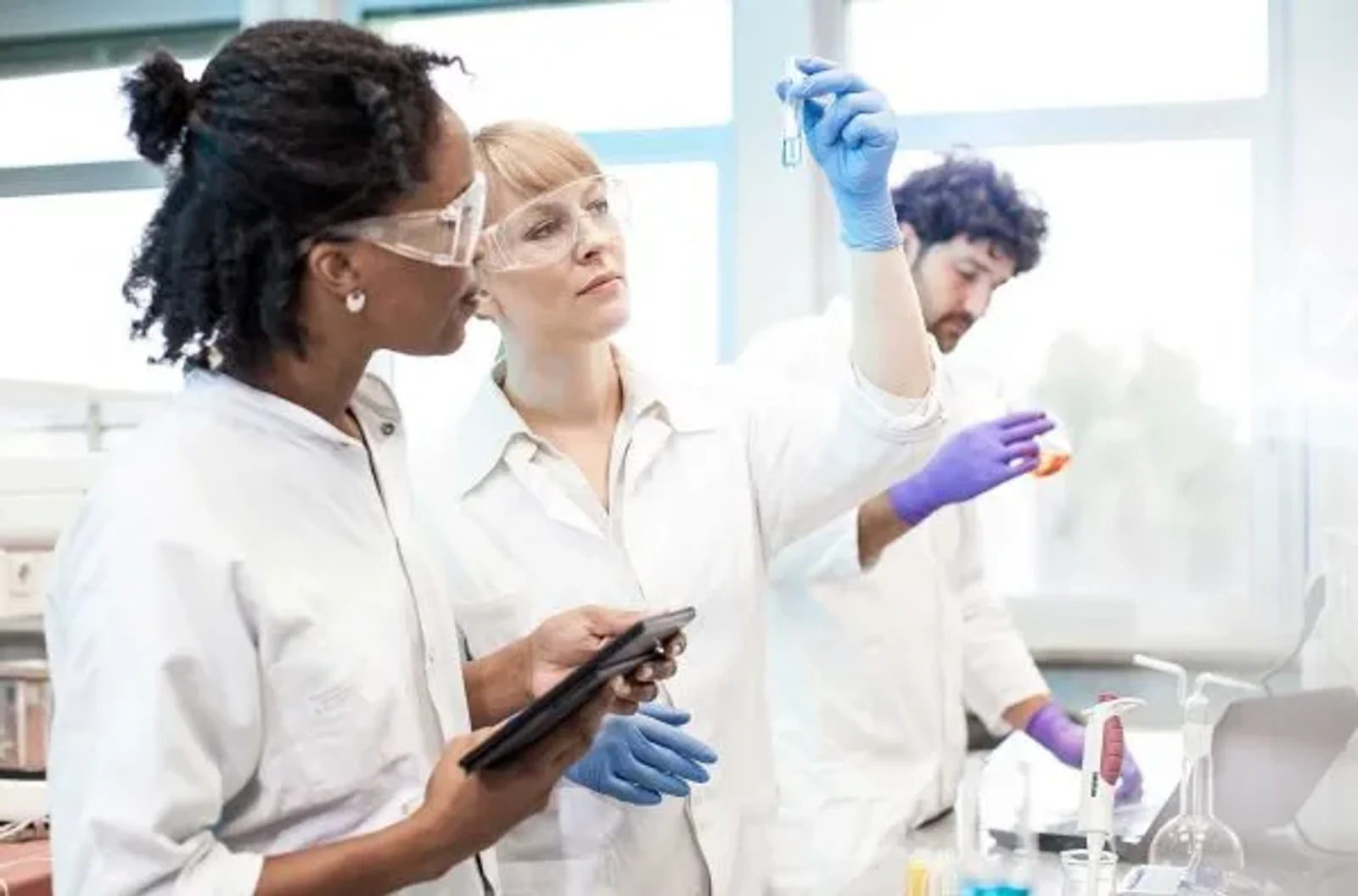
Practical, hand-on training is an essential part of the Medical Laboratory Technician (MLA/T) program at Anderson College, and plays a powerful role in ensuring in-demand graduates have precisely what is required to professionally contribute to their healthcare teams. Engaging in healthcare training programs, studying to become a medical lab technician to receive your medical technician certification, should include a laboratory component that exposes you to the latest technology and techniques.
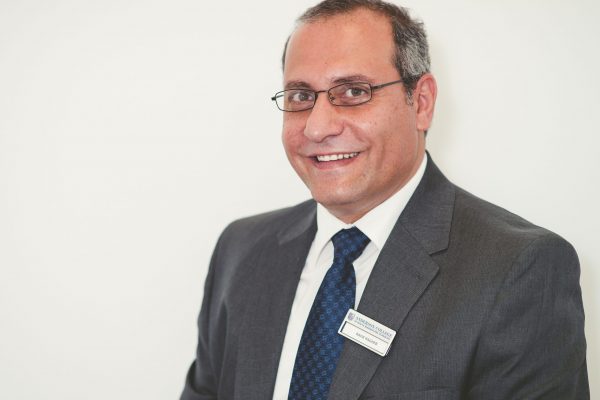
We had the opportunity to delve into the details of what the laboratory training component really looks like for our Anderson Students – the 101 of Medical Lab – with Program Chair, Rafik Ragheb.
Here is where your education really begins … so that you can make an informed decision before embarking on a career that is mind expanding, highly rewarding and, at this time in our history, unprecedentedly in demand.
Training in a Medical Laboratory 101
The Role of the Medical Laboratory for Training Future Med Lab Technicians.
The scope of the roles played by medical laboratory assistants and technicians (MLA/Ts) are expanding. As such, beyond the basics, they need to be exposed to and conduct more of the tasks, more of the competencies, required – like molecular diagnostics. The pandemic spurred an exponentially increased need for COVID testing, and so this is a new area that has been added to an MLA/T’s job description. This continues to open up more opportunities in this area.
Actually, employers are looking for MLA/T candidates who have their certification. This is the certification that, after the completion of our comprehensive program, students will be prepared to attain. As a sidenote, employers also look for a strong science background, and how willing a potential employee is to learn. The lab allows students to demonstrate their skills in all these areas and prepare for what will be required on the job. Practical training is crucial. Over the 11 months of training we build up the base and the foundation of information to allow the candidate to absorb and then we provide the opportunity for them to apply their knowledge in all directions, even for molecular diagnostics.
The Components of Practical Training
Practical training consists of two components. One component is the practical training in our on-campus lab and basically consists of lab rotations. There are a number of sessions over 16 weeks. Translated into hours, this is 50% of the program time. The clinical placement is the second part of the practical training. This is done onsite with potential. Every student is highly prepared before moving into the placement portion of their training.
Program Flow and Steps Students Must Take Before Entering the Lab
We currently offer a hybrid model which is a mix of theorical and practical. So, just to give you an example, once the student starts the med lab technician or assistant program, they are entitled to a number of hours for every module, and those hours are split between theory and practice. They go hand in hand. By doing this, students are prepared, since they get the theory/knowledge, and then have the opportunity to apply it in a real-life setting.
There are some instructions to follow before entering the lab. Once you become a student, you will rotate between work on the campus and in the lab. Since COVID, there are very rigorous measures in place, and those are public health measures. We do screening to make sure that the students are fully immunized, for COVID and for others required immunizations. This is to ensure safety. Just to give you an example, they have to be vaccinated for Hepatitis B before they get to start lab work and start taking blood from each other. In addition, from the very beginning, they are trained on how to use Personal Protective Equipment (PPE). This is how the students prepare themselves before entering the lab.
The Sections of the Lab
We teach students that this laboratory setting is split into two areas.
The first is the reception area, or the clean area, and is similar to a clinic or outpatient area in a hospital or a collection centre. That’s the first section of the lab. The second part is the processing area. So, you can see that phlebotomy will fall under the clean area. Phlebotomy, and ECG, are the clean area networks.
Students learn to collect the samples from the patient and then transfer them to the processing area. The processing area will include different departments. Those are the departments to process the samples. Urine analysis is one of the areas, and microbiology is another area, biochemistry another area, hematology, histology, etc.
Training in Each Area
Every department, or area, is a separate module that students’ study and practice within, as a practical rotation of the tasks or what we call competencies. This is the scope of practice. So, if it is urine analysis, the students will be performing urine analysis. They will use a microscope as they use chemical tests, and physical tests. They also learn how to apply that knowledge in this area, and how to physically manifest this into the urine report. We study many, many things, but it is actually not just the urine, but all sorts of body fluids. There are many body fluids that can be handled the same way.
Microbiology is the area where you grow bacteria. This is done when you suspect a disease, a microbial disease or viral disease, or anything related to parasitic disease, and you’d like to explore and investigate what the reasons are. If it is bacteria, what is the name of the bacteria? What is the type of bacteria and what does it look like? And then we also assist the doctors with how to give the patients the best treatment, like the best antibiotic.
Biochemistry or chemistry is an area where we do analysis for certain parameters like glucose, sodium, and potassium, those are chemical parameters found in our blood. They are related to different diseases, so we need to know about them as well. And then, similar, of course, we apply this to other areas like histology, cytology, hematology, blood, identifying different types of blood cells, etc.
The Total and Type of Lab Areas
There is phlebotomy, ECG, urine analysis, microbiology, biochemistry, and then histology and cytology. But in terms of what the students’ study or how we introduce it to our students, in terms of departments, you will find that the processing lab will have I would say five main areas. And in addition to this, you have the phlebotomy and the ECG, there’s two, two plus five is seven. And then the remaining are areas where students are learning about ethics and legislation. So those are basically seven areas in a physical lab.
What Else Students Need to Know – Applying and The Power of Passion
Preparation …
There are a number minimum requirements to get into the program, however, we see a lot of diverse populations in terms of educational backgrounds or even years of experience. There are different candidates with different skills and different educational backgrounds.
It is important to be a good communicator, with proper English communication skills. However, you may have proper English skills but not necessarily be a good communicator. So, ensure you can communicate well. In addition, I would say, having the scientific background is important. Not necessarily a heavy background in science but based on the ministry requirements a post-secondary education program is required, so the candidate needs to have a high school diploma (Grade 12 here in Canada). And to finish and graduate with this level, you need certain courses. One of them would be biology, chemistry, math, or English. So those are the minimums. Some candidates even come with a bachelor’s degree from a Canadian university or even higher.
I would suggest students focus on having the minimum requirements but – this is the message we offer our students – “Be prepared”. Some students may tell us that they haven’t studied for some time, and I will advise them to be acquainted, or familiarize themselves, with what’s going on. For instance, a topic like COVID, they should know how we do the testing, what the rapid test is, do we need a confirmatory test, or a stronger test, they should know these things. Candidates also need to know that they will have to prepare for and complete a qualification exam. When they apply to our program, they must take that exam. It is a mix of maths and English all embedded into one.
Opportunities
There are so many opportunities! Know that new students come to us from all different walks of life and experiences, like from hospitality, which has nothing to do with, let’s say, science or medicine. So how do they integrate into our program? As I said, as long as they have that basic knowledge, we will build on it. We are starting from scratch. But meanwhile, what this candidate can offer is excellent customer service. So, if this student or new candidate is in hospitality, they know how to offer the best customer service. And this is actually what we do for our patients. So, in the end, this candidate is trained to offer a service. We look for how your skillset can support your role as an MLA/T and then we teach you all you need to know technically.
I will say, students have to have a passion, they have to be able to provide quality service, and they have to have characteristics like paying attention to details, paying attention to current topics in the field, or even paying attention to the opportunities for bettering themselves and their patients’ lives.
Final Advice
My advice is always, before students take any further steps in their life, explore the opportunities, and determine why they would want to take action. If the candidate is at least 90% certain that this is an opportunity they can be passionate about and a program and career they can be dedicated to, I would say that this candidate will be very successful and a terrific asset to the profession.
____________________________
With 70% of all medical decisions relying on lab results, an increase in testing demand since Covid-19, and a projection of 42% of current MLT professionals looking to retire, there has never been a better time to explore a career within a medical laboratory.* Passionate and professional MLA/Ts are vital to the healthcare profession. If you are looking to explore phlebotomy training classes or become a medical technician, there has never been a better time.
If you’re ready to explore more, we’re here to help.
In minutes you can Take the “Medical Professional Career Discovery Quiz”. Or if you’re all set for your Medical Laboratory Technician career, book a virtual appointment today and let’s get you started!
*For more information and statistics on MLT shortages within our Canadian Healthcare system, review this report by MLPAO, and this report by the CSMLS.
Found this useful? Share it with a friend who's exploring their next career step.
Frequently asked questions
Quick answers about applying, funding, and life at Anderson College.
How long does it take to complete a program at Anderson College?
What financial aid options are available?
Are international students welcome?
How do I apply?
Does Anderson College offer job placement support?
Still have a question? Speak with an Admissions Advisor →
More from the blog

5 Things to Consider Before Enrolling in an Early Childcare Assistant Program
Choosing a career in early learning and childcare means stepping into a role that supports […] …
Read article
Beenash’s Journey to a Successful Medical Laboratory Assistant Career
Each year, in the spirit of celebrating the diverse and powerful experiences of our students, […] …
Read article
Stronger Communities, Brighter Futures: How Anderson College Helps Protect Ontario
Supporting communities is at the heart of Anderson College’s mission, and it has been for […] …
Read article