
What Students in Dental Assistant Training Need to Know About X-Rays
By Jennifer Maki · Communications Specialist
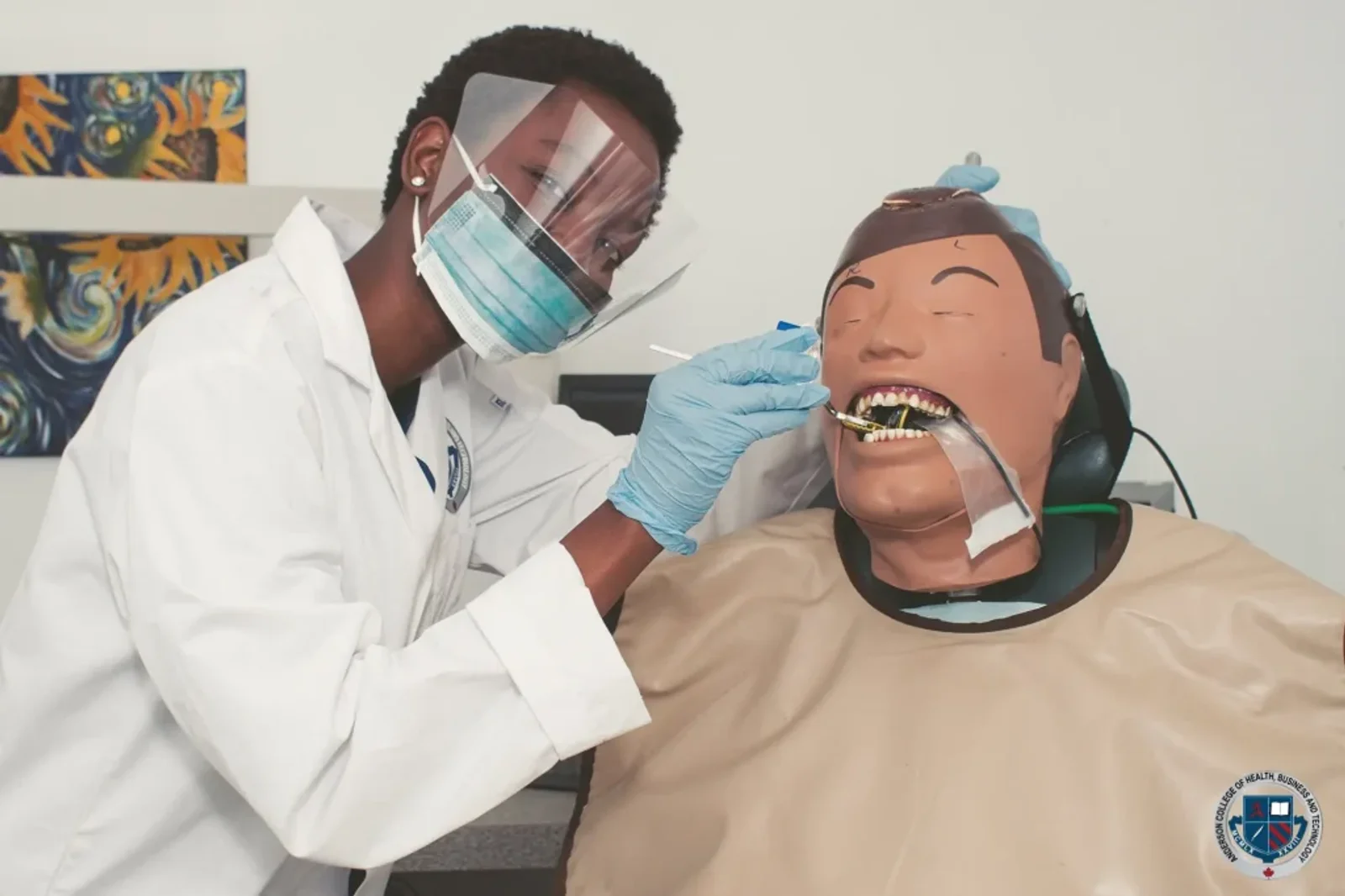
Level 2 Dental Assistants handle a number of important responsibilities in a dental practice, including mechanical polishing, obtaining impression and occlusal records and applying anesthetics and whitening. One of the most important of their responsibilities, though, is helping to take and expose dental radiographs, also known as dental x-rays.
Anyone who’s ever been to the dentist likely has some idea of how this procedure works already, having gone through it themselves, but students in intra oral dental assistant training might be interested to learn more about this useful diagnostic tool, how it works and why it’s so useful.
Dental X-rays Use Radiation to Create Images of a Patient’s Teeth and Bones
Dental x-rays are images that use radiation to highlight a patient’s teeth and bones below the surface of their skin, gums and enamel. While these x-rays used to be exclusively done on film, modern dental practices are increasingly using digital x-ray photography, as it’s quicker and easier, and emits significantly less radiation.
However, it’s important to note that the amount of radiation used in either technique is incredibly low and considered safe for children and adults. The use of a lead vest to protect a patient’s chest, abdomen and pelvic region can further ensure the patient’s safety as well. Pregnant women, however, are cautioned to avoid dental x-rays, as radiation may not be safe for developing fetuses.
There Are Many Different Types of Dental X-Rays
Whether using film or a digital process, as an intra oral dental assistant, you’ll be expected to take several different types of intraoral dental x-rays, which you’ll learn about in your intra oral dental assistant training.
The bitewing technique, for example, requires a patient to bite down on a special piece of paper in order to judge how well the crowns of their teeth line up and to check for interdental cavities. Occlusal x-rays, on the other hand, are done with the jaw closed and, unlike bitewing x-rays, take in all of a patient’s teeth with one shot. Periapical x-rays provide a view of an entire tooth, from the crown to the bone that supports the tooth. Panoramic x-rays are done with a machine that rotates all the way around a patient’s head, giving a 360 degree view for checking wisdom teeth, planning for dental devices or investigating jaw problems.
Why Dental X-Rays Are Important for Students in Intra Oral Dental Assistant Training
Students in intra oral dental assistant schools should know that X-rays are important in examining those elements of a patient’s dental health that can’t be seen with the naked eye. This could include any number of issues of varying severity, such as tooth decay, misalignment, changes in the condition and position of teeth and bone loss in the jaw. Without dental x-rays, dentists and dental assistants would be limited to what they can see and what the patient can report, which would mean a lot of dental problems would only be found after developing into more severe cases. Dental x-rays, then, allow dental practices to be more proactive in their care.
Dental x-rays are also important for children, as they allow a dentist to monitor the growth of adult teeth and the development of wisdom teeth, ensuring that no teeth are impacted and there is sufficient room for the adult teeth to come in. This is why children generally require more frequent x-rays than adults.
Even adults, however, should be getting dental x-rays about once a year as part of their regular dental care.
Are you interested in training to become an intra oral dental assistant?
Contact Anderson College for more information about our Intra Oral Dental Diploma training program.
Found this useful? Share it with a friend who's exploring their next career step.
Frequently asked questions
Quick answers about applying, funding, and life at Anderson College.
How long does it take to complete a program at Anderson College?
What financial aid options are available?
Are international students welcome?
How do I apply?
Does Anderson College offer job placement support?
Still have a question? Speak with an Admissions Advisor →
More from the blog

5 Things to Consider Before Enrolling in an Early Childcare Assistant Program
Choosing a career in early learning and childcare means stepping into a role that supports […] …
Read article
Stronger Communities, Brighter Futures: How Anderson College Helps Protect Ontario
Supporting communities is at the heart of Anderson College’s mission, and it has been for […] …
Read article
From Skills Gap to Certification Ready: Bruce’s Dental Assistant Program Journey
Bruce’s journey toward certification began with experience, clarity, and a deep understanding of what he […] …
Read article