
Future of Medical Esthetics: AI and Tech in Skincare
By Jennifer Maki · Communications Specialist
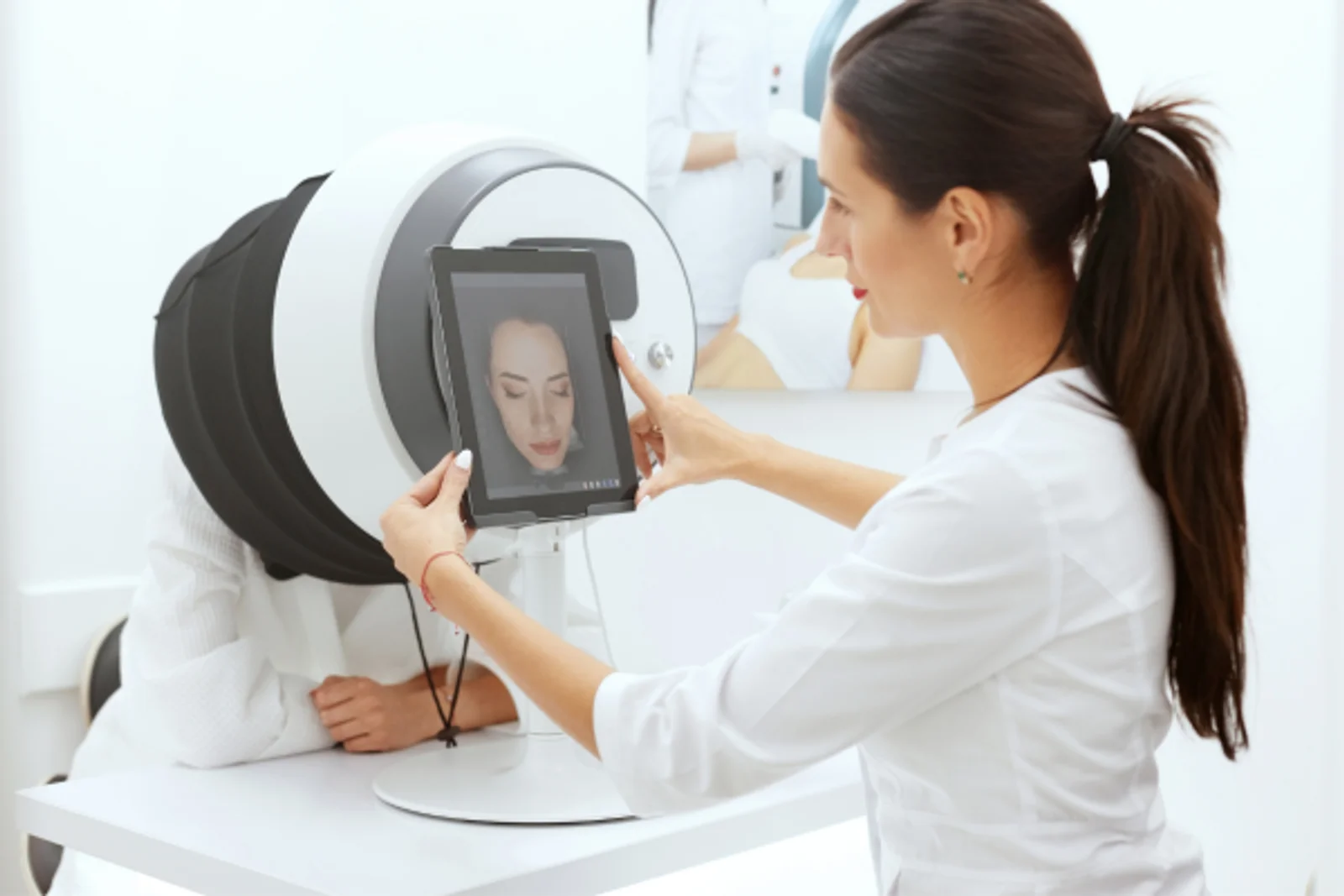
Your inside look into the future of medical esthetics – how AI and tech are revolutionizing skincare careers and professional training.
What Is Driving the Future of Medical Esthetics?
The beauty industry is being redefined by innovation and nowhere is that transformation more apparent and exciting than in current advancements in technology and AI in skincare.
From smart diagnostic devices that analyze skin conditions with microscopic precision to virtual consultations powered by machine learning, artificial intelligence is reshaping how professionals assess, treat, and enhance the skin.
These advances are not only revolutionizing treatment outcomes but are also changing the way medical esthetician training programs are run and how estheticians learn and work. As the demand for technologically skilled professionals grows, students in modern medical esthetician training are gaining a competitive edge … learning to merge hands-on artistry with data-driven insight to deliver personalized, results-focused care.
In this blog, we’ll explore how AI and developing technologies are transforming skincare, advancements shaping today’s clinics, and how Anderson College is preparing students for a medical esthetician career that meets the demands of this evolving, high-tech industry, while continuing to mentor the value of delivering highly personalized client care.
How Is AI Changing the World of Medical Esthetics?
AI is setting a new standard in skin evaluation, learning from millions of data points to inform faster, more accurate diagnoses.
Across esthetic practices today, AI models can analyze images (even selfies) to detect subtle changes in pigmentation, pore health, redness, hydration, and barrier integrity. Some advanced systems now estimate trans-epidermal water loss (TEWL) and moisture levels from just a smartphone image. Based on those findings, the algorithms recommend personalized regimens, selecting ideal device protocols, actives, or modality combinations tailored to each client’s unique skin profile.
Examples of AI skincare technology:
- VISIA Complexion Analysis – uses multi-spectral imaging for in-depth skin diagnostics.
- Perfect Corp’s YouCam / AI Skin Scanner – evaluates over 15 skin concerns in real time.
- Haut.AI / SkinGPT – uses generative AI to simulate treatment outcomes.
With these tools, estheticians and students can confidently blend technology and touch, using data to validate intuition.
What Are the Latest Technological Advancements in Skincare?
The advent of non-invasive technology is reshaping how treatments are delivered, often eliminating the need for downtime for the client.
Medical esthetics technology, such as cutting-edge laser, radiofrequency (RF), ultrasound, microneedling-plus energy, and cryotherapy systems now incorporate AI feedback to adjust energy delivery in real time. Devices can modulate intensity based on tissue responsiveness, reduce risk zones, or adapt treatment depth mid-session. These smart systems optimize efficacy while minimizing discomfort or damage.
Simultaneously, the at-home device market is booming. Smart skincare gadgets, like LED masks, microcurrent wands, ultrasonic infusers, are increasingly embedded with sensors and mini-AI chips that monitor skin changes over time and adapt protocols accordingly.
For example:
- AI-infused cleansing brushes that adjust speed or vibration based on skin sensitivity.
- The L’Oréal “Perso” device, which produces personalized skincare formulas on the spot using AI.
These innovations democratize access to professional-level care, allowing clients and students to learn, observe, and fine-tune skin health in real time.
How Is Technology Shaping Skincare Careers?
Beauty is becoming data-driven, hyper-personalized, and digitally connected.
Rather than generic protocols, estheticians now harness algorithms to predict a client’s skin trajectory, choosing therapies that evolve as the skin responds. This shift toward personalized skincare solutions is more than a trend; it’s becoming the new standard of care.
Meanwhile, virtual consultations and tele-dermatology platforms are redefining client engagement. Clinicians can assess high-resolution photos or live video, interpret AI-generated diagnostics, and craft care plans remotely. As Forbes notes, this integration of technology and telemedicine expands accessibility and creates hybrid models of esthetic practice that combine digital insight with human connection.
Together, these forces are shaping the future of medical esthetics, a sector where professionals are as fluent in algorithms as they are in aesthetics, and where care is both human and high-tech.
What This Means for Medical Estheticians
As technology transforms the beauty landscape, the role of those with medical esthetician diploma is expanding far beyond traditional techniques. Professionals entering the field today have the chance to become true specialists, combining their understanding of skin science with fluency in digital tools and tech-driven treatments.
This evolution opens doors to new career paths, from advanced clinical roles and laser therapy to AI-assisted analysis and non-invasive device operations. To stay competitive and confident, estheticians are prioritizing continuous learning, pursuing micro-credentials, industry certifications, and workshops focused on emerging technologies and personalized care solutions.
In a field that moves as fast as innovation itself, staying informed means staying relevant. For those considering this rewarding, ever-evolving profession, discover 5 Powerful Reasons to Pursue a Career in Medical Esthetics and see how your passion for beauty can align with a future built on innovation and care.
What Will You Learn in Anderson College’s Medical Esthetics Program?
At Anderson College, students gain the perfect balance of science, artistry, and hands-on skill – training to deliver exceptional client care in today’s skincare industry. Through a blend of classroom learning, practical labs, and real-world experience, you’ll master every stage of esthetic practice, from foundational techniques to advanced medical treatments.
Program Highlights:
- Fundamentals of Esthetics: Build a strong base with Introduction to Esthetics, Makeup, Lashes and Brows, and the essentials of skin health and client care.
- Core Treatments: Learn to perform Facials (basic to advanced), skincare treatments, Hair Removal Techniques, Body Treatments and Spa Massage, along with Manicures and Pedicures.
- Advanced Medical Esthetics: Train in Laser and Light-Based Therapies such as Intense Pulsed Light (IPL) and Non-Ablative Fractionated Laser (NAFL) for skin rejuvenation, Tattoo Removal, Remedial Makeup, and the use of professional devices including Radiofrequency and Microdermabrasion.
- Business and Professional Skills: Develop Salon/Spa Business and Career Success expertise to confidently manage client relationships, operations, and your own career path.
- Hands-On Training: Apply your knowledge during a 4-week practicum in a professional medical spa or esthetic clinic, gaining invaluable industry experience before graduation.
With 1,320 hours of immersive instruction, this 66-week program prepares you to step into the workforce with the technical confidence and client-centered mindset employers seek.
Embracing the Future of Beauty and Innovation
As AI and technology continue to reshape the world of medical esthetics, one thing is clear … the future belongs to those who blend compassion with curiosity and artistry with innovation. From AI-powered skin analysis to advanced, non-invasive treatments, today’s estheticians are equipped with tools that once seemed futuristic. These technologies aren’t replacing human touch; they’re amplifying it, helping professionals deliver safer, smarter, and more personalized care than ever before.
If you’ve ever imagined transforming your passion for beauty and wellness into a rewarding career, now is the time to explore how to become a medical esthetician. The journey begins with training that prepares you to embrace change, master emerging technologies, and thrive in a field that merges science and heart.
Hear directly from those who’ve taken this path – our students and graduates – by watching their inspiring stories below.
If you’re still not quite sure if this is the industry for you, take the “Medical Esthetician Career Discovery Quiz”. But when you’re ready to launch your Medical Esthetician career, we’re here to help you navigate the steps to achieve your career goals.
Book a virtual appointment with us today and let’s get you started!
Quick Links to Fuel Your Success!
We want to make sure you have what you need to succeed! Check out these reference links:
- Medical Esthetician – Medical Esthetician Course & Program at Anderson College
- Medical Esthetician: A Look Inside This Specialized Career
- How to Become a Medical Esthetician
- 5 Powerful Reasons to Pursue a Career in Medical Esthetics
FAQs About the Future of Medical Esthetics
Q1: What is AI’s role in skincare?
AI helps analyze skin data, detect conditions, and personalize treatments based on individual needs. It enhances accuracy and results.
Q2: How does technology impact esthetician careers?
It creates new roles in laser therapy, AI-driven skin analysis, and device operation—broadening career options and earning potential.
Q3: Can AI replace estheticians?
No. AI supports professionals by improving precision, but human touch and judgment remain essential to client care.
Q4: Is learning medical esthetics difficult?
Not if you’re passionate about skincare! With hands-on training and supportive instructors, you’ll gain confidence quickly.
Q5: Why choose Anderson College for medical esthetics training?
Anderson combines expert instruction, real-world labs, and modern technology to prepare students for success in today’s high-tech skincare field.
Found this useful? Share it with a friend who's exploring their next career step.
Frequently asked questions
Quick answers about applying, funding, and life at Anderson College.
How long does it take to complete a program at Anderson College?
What financial aid options are available?
Are international students welcome?
How do I apply?
Does Anderson College offer job placement support?
Still have a question? Speak with an Admissions Advisor →
More from the blog
Top Medical Esthetician Skills to Excel in the Industry
The medical esthetics industry continues to grow as more people seek non-invasive treatments that support […] …
Read article
5 Things to Consider Before Enrolling in an Early Childcare Assistant Program
Choosing a career in early learning and childcare means stepping into a role that supports […] …
Read article
Stronger Communities, Brighter Futures: How Anderson College Helps Protect Ontario
Supporting communities is at the heart of Anderson College’s mission, and it has been for […] …
Read article