
Becoming a Diagnostic Medical Sonographer in Canada – 5 Things You Need to Know!
By Jennifer Maki · Communications Specialist
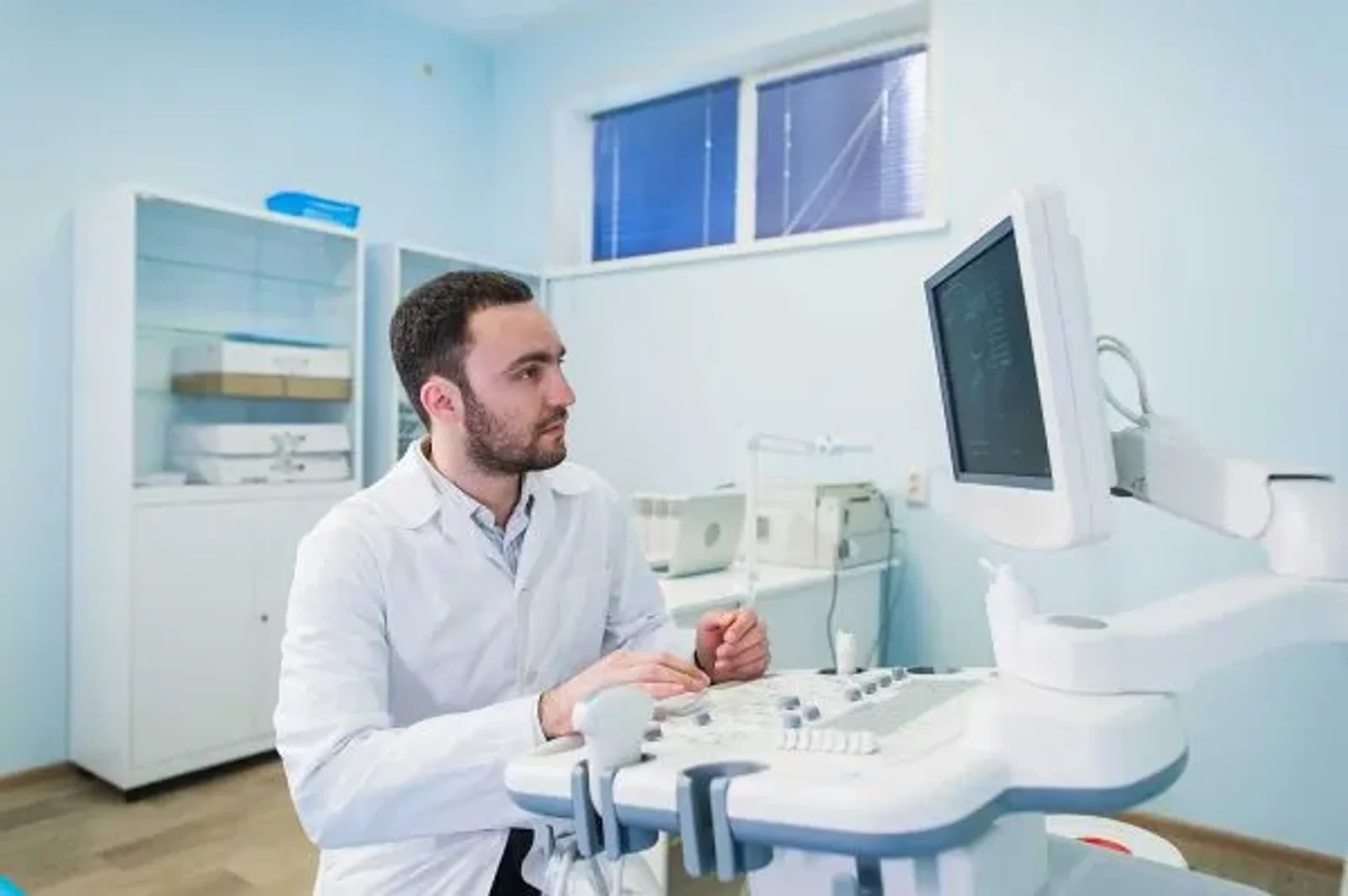
Diagnostic ultrasound is revolutionizing medical diagnosis and treatment. A non-invasive, real-time tool, that comes in portable form and can not only help patients discover health challenges faster, but supports physicians in surgery and beyond, is driving demand for trained professionals. If you’re new to Canada, have experienced working in the healthcare profession in your home country, or have dreamed of pursuing a career that is challenging and demanding and plays a key role in saving lives, then becoming a diagnostic medical sonographer (DMS) /ultrasound technologist, may be a fit for you. If you’re looking for a second career to both stretch and empower you to fulfill a dream to do something extraordinary, then we have a way. With the expanding need for qualified healthcare professionals to support an aging population, there has never been a better time to explore this career option.
But first …
5 Things you Need to Know to Become a Medical Sonographer in Canada
1. What Sonography is and What a DMS Actually Does.
Sonography is used to evaluate various parts of the body, superficial organs and structures. The quality of the sonographic examination is linked to the skill of the sonographer who tailors the examination and interprets the findings by selectively recording images and real-time physiological information. The final diagnostic report produced by the physician is reliant on the technical and intellectual skills of the sonographer.
A Diagnostic Medical Sonographer (DMS) is a highly-skilled medical imaging professional who utilizes their technical expertise, knowledge of human anatomy and the physical principles of ultrasound to produce diagnostic images of the body that enable diagnosis and treatment for patients. They are also keenly aware of the need for compassion and kindness, as they help patients navigate through the process.
2. Admission Requirements.
- Ontario Secondary School Diploma or equivalent, with senior-level College (C) University (U) level courses: English / Mathematics / Minimum one senior science; Chemistry or Biology or Physics (Biology is strongly recommended)
- Post-secondary level courses may be used to satisfy subject prerequisites. Official transcripts must be provided
- Students completing the English requirement at a high school in a country other than Canada and who have English as a second language, must complete an acceptable English Assessment TOEFL or equivalent testing
- Foreign trained individuals must have their credentials assessed by WES or ICES for equivalency
- Profession Specific Aptitude Test and CASper Test
- There are also Non-Academic and Practicum Requirements that need to be considered as well, that address the need for students to be physically and technically skilled and sound to perform the full range of duties required of a DMS. You can learn more Here.
Take the “Medical Professional Career Discovery Quiz”
3. What You Can Expect.
The program can be completed in 87 weeks, including 2 practicums (16 weeks each) with on-the-job training, offsite with potential employers. It provides you with a foundation of skills and experience, both in classroom learning with industry experts and in the ability to apply that knowledge to real-life, practical activities. Courses covered will include Anatomy, Physiology, Physics, Intro to Sonography, Scans and Screening and Mental Health Fundamentals, to name a few. You will also be able to test your knowledge and skills using state-of-the-art equipment and the latest in ultrasound technology. We have small class sizes, and a student-centred approach to education, which includes offering a community connection for those adjusting to Canadian culture and adapting to a home away from home.
4. The Benefits of Being a Licensed Professional.
The overall program goals and objectives are aligned with Sonography Canada’s National Competency Profile version 6.0. Sonography Canada requires that students have met exam eligibility requirements from an accredited institution. You can learn more about our process of accreditation here.
Sonography is a regulated profession in Ontario under the College of Medical Radiation and Imaging Technologists of Ontario (CMRITO). Sonographers are required to be registered with CMRITO to be able to practice in Ontario and there is a process of accreditation to go through with both the American Registry of Diagnostic Medical Sonography (ARDMS) and Sonography Canada.
Receiving leading-edge training, achieving the necessary accreditations, and becoming licensed as a diagnostic medical sonographer, offer you the foundation and credibility to build a career that is second to none. It will change your life, and you will change the lives of others.
5. The WHY of Doing it Now!
Professional sonographers can work in a variety of healthcare settings from hospitals, clinics and laboratories to governance associations, even travelling internationally to bring expertise on-location, using portable equipment.
Diagnostic ultrasound is a fast-growing field, that will continue to expand as baby boomers age. With a job prospect rating of “Good”, the highest rating offered by Job Bank, this career offers stability and growth potential, particularly as you evolve and specialize as a professional in the industry. And the salary is stellar too, with a national average of $73, 486 / year.
~
There has never been a better time to enter the healthcare industry – we need You! And if you are inspired by a challenge, looking for something to test your mind and stamina and are passionate about making a difference … then call one of our Admissions Advisors today and we’ll get you started.
Quick Links to Fuel Your Success!
We want to make sure you have what you need to succeed! Check out these reference links:
• Diagnostic Medical Sonographer Program at Anderson College
• 5 Brilliant Reasons to Become a Diagnostic Medical Sonographer (DMS)
• Ultrasound Saves Lives – So Can You!
• Anderson College Announces Launch of Diagnostic Medical Sonographer Program (newswire.ca)
• Medical Sonographer near Toronto (ON) | Available jobs (jobbank.gc.ca)
Found this useful? Share it with a friend who's exploring their next career step.
Frequently asked questions
Quick answers about applying, funding, and life at Anderson College.
How long does it take to complete a program at Anderson College?
What financial aid options are available?
Are international students welcome?
How do I apply?
Does Anderson College offer job placement support?
Still have a question? Speak with an Admissions Advisor →
More from the blog

5 Things to Consider Before Enrolling in an Early Childcare Assistant Program
Choosing a career in early learning and childcare means stepping into a role that supports […] …
Read article
Stronger Communities, Brighter Futures: How Anderson College Helps Protect Ontario
Supporting communities is at the heart of Anderson College’s mission, and it has been for […] …
Read article
How Specialized Training Shaped Shahrzad’s Path as a Personal Support Worker
Each year, in the spirit of celebrating the diverse and powerful experiences of our students, […] …
Read article